A school building does more than hold classrooms. Every corridor, courtyard, and material choice communicates values to the children who use it. Acanthus has spent 14 years studying what great school design does to learning outcomes. We are one of Delhi NCR’s leading educational institution architects. Here is what every school trustee and principal should know.
Decades of post-occupancy research point to five design principles that distinguish thriving learning environments from ordinary ones. First, daylighting and ventilation — classrooms oriented to receive diffuse northern light reduce glare and lower cooling loads, with cross-ventilation eliminating reliance on mechanical air systems for eight of twelve months in the Indian climate. Second, acoustic zoning separates noisy areas like sports courts, canteens, and music rooms from quiet learning zones, making background noise a non-issue without expensive treatment. Third, flexible pedagogy spaces replace the fixed rows of 1950s-style classrooms with rooms that convert from lecture to studio to breakout in under three minutes. Fourth, safety and legibility ensure that children and staff can instinctively navigate the campus, with controlled entry points and clear sightlines from administrative areas. Fifth, outdoor learning integration treats courtyards, shaded verandas, and amphitheatre lawns not as amenities but as genuine learning infrastructure — schools that use these spaces see measurably higher student well-being scores.
5 Design Principles That Define Great Schools
Research points to five principles that separate thriving schools from ordinary ones.
Daylighting and Ventilation Orient classrooms to receive diffuse northern light. This reduces glare and cuts cooling loads. Cross-ventilation eliminates mechanical air systems for eight of twelve months in the Indian climate.
Acoustic Zoning Keep sports courts, canteens, and music rooms away from quiet learning zones. This controls background noise without expensive treatment.
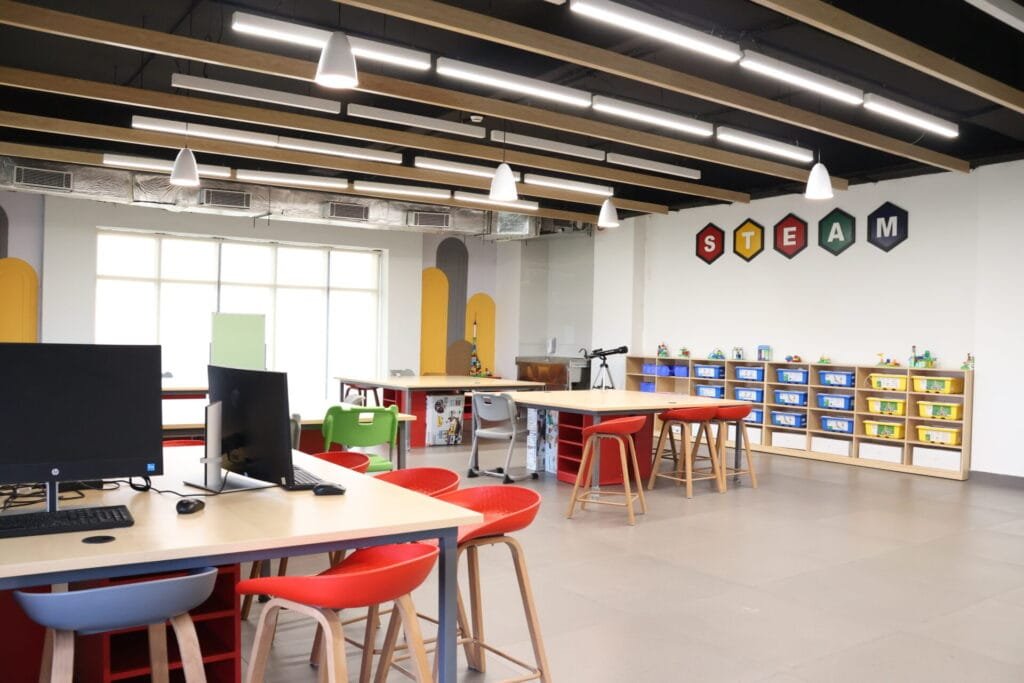
Flexible Pedagogy Spaces Replace fixed rows with rooms that convert from lecture to studio to breakout in under three minutes.
Safety and Legibility Children and staff should navigate the campus instinctively. Controlled entry points and clear sightlines from admin areas make this possible.
Outdoor Learning Integration Courtyards, shaded verandas, and amphitheatre lawns are not amenities. They are learning infrastructure. Schools that use these spaces report measurably higher student well-being scores.

Schools We Have Designed Across India
Acanthus has worked under widely varying briefs across India. Our projects include:
- DPS Gurugram — an urban campus blending diversity with visual consistency
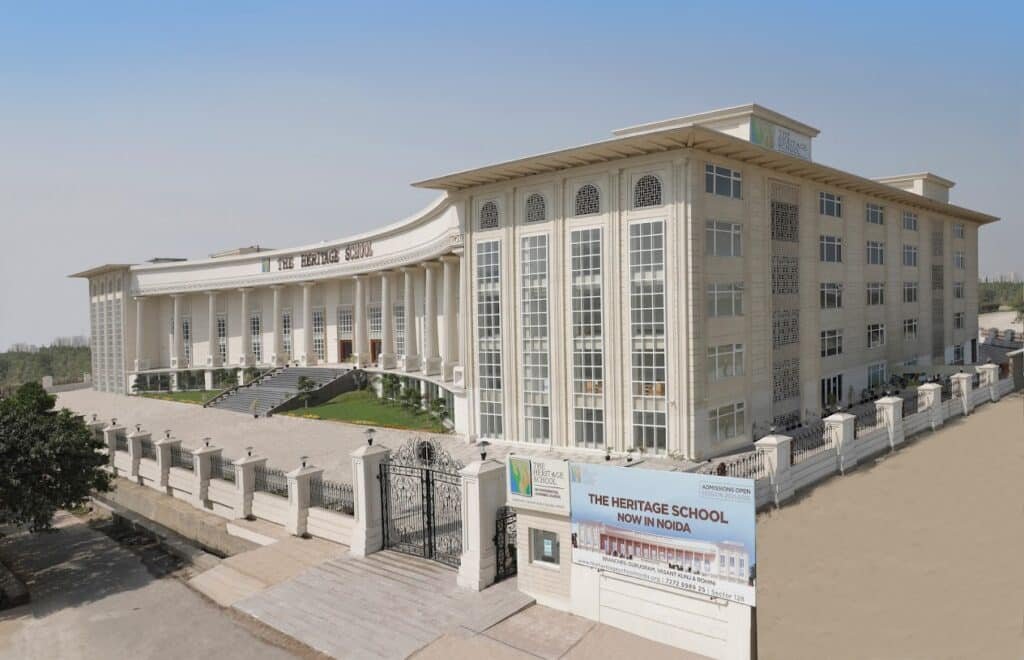
- Heritage School, Delhi — contemporary ceilings and stone cladding
- St Xavier High School, Gurgaon — Moroccan-inspired windows
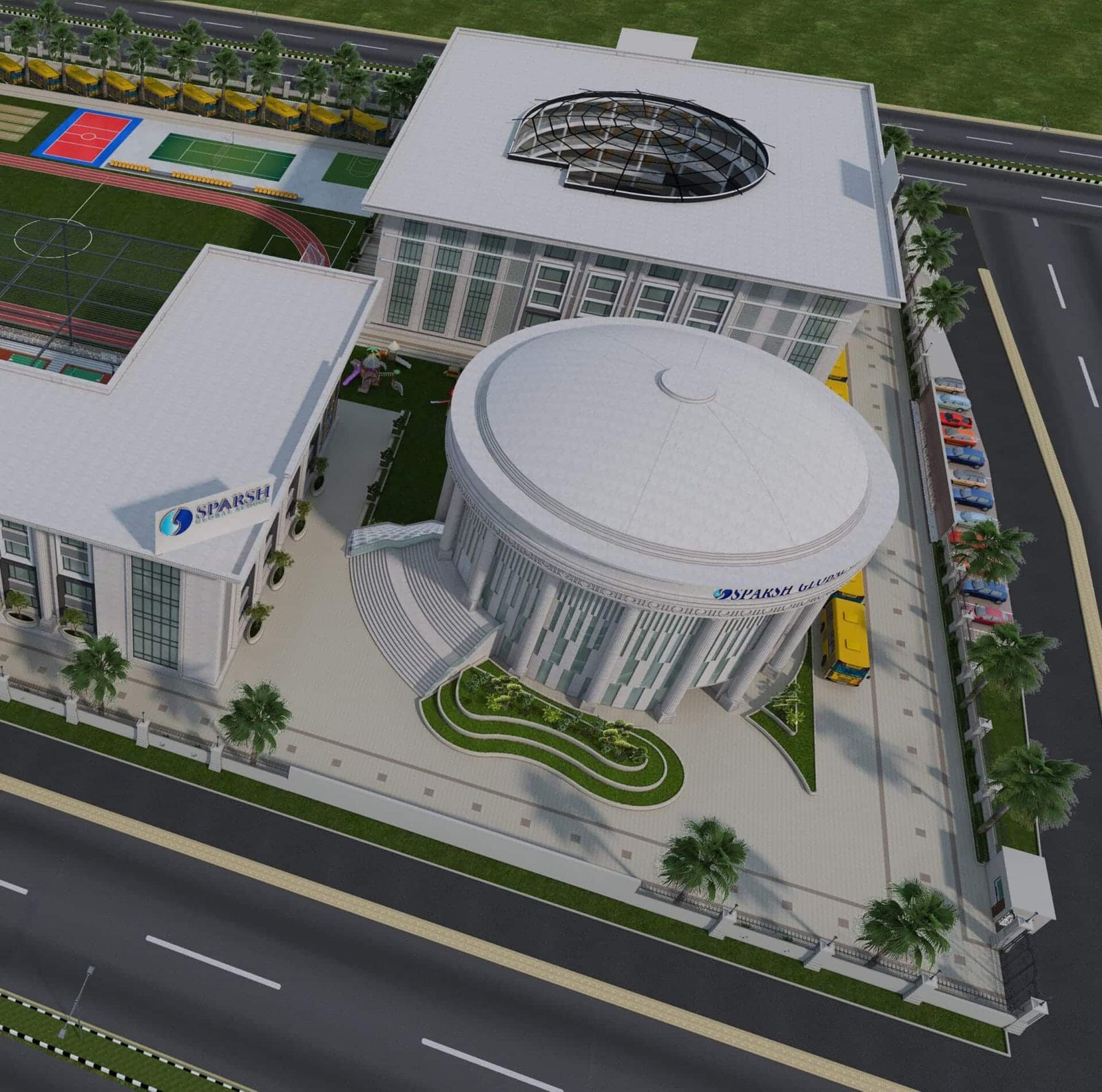
- Sparsh Global School — large windows and generous natural light
- Galgotias University, Greater Noida — designed for over 10,000 students
- G.D. Goenka — tradition blended with contemporary form
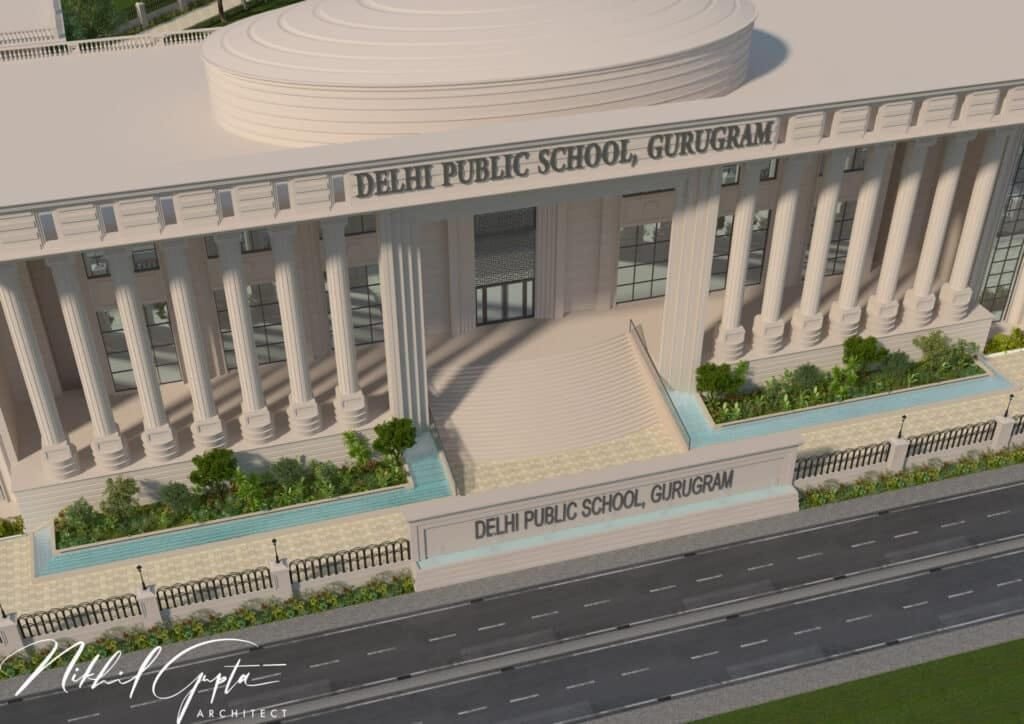
The DPS Gurugram project illustrates the approach at its clearest. A 4-acre urban campus designed for 2,400 students, it clusters classrooms around four shared courtyards — each with a distinct programme of quiet reading, active play, outdoor science, and art. Children develop a mental map of the school within their first week, reducing anxiety and improving navigation for younger students, all without sacrificing open space despite the tight urban site.
When evaluating any architectural proposal for a new school or renovation, decision-makers should ask whether the architect has walked the site at different times of day, since sun angle determines classroom comfort across the entire year. They should check whether pedestrian and vehicle circulation are separated — drop-off congestion is the number one complaint in newly built schools. Provisions for future expansion without disrupting operations, prior experience with educational projects, MEP coordination from the outset, and integration of rainwater harvesting and solar orientation are all equally important considerations.
3 Trends Shaping School Design by 2030
India needs to build or renovate around 300,000 school buildings before 2035. Three trends will define competitive schools in this decade.
Hybrid Learning Infrastructure Video-conferencing alcoves, acoustic isolation booths, and high-bandwidth networks are now admission-competitive features, not optional extras.
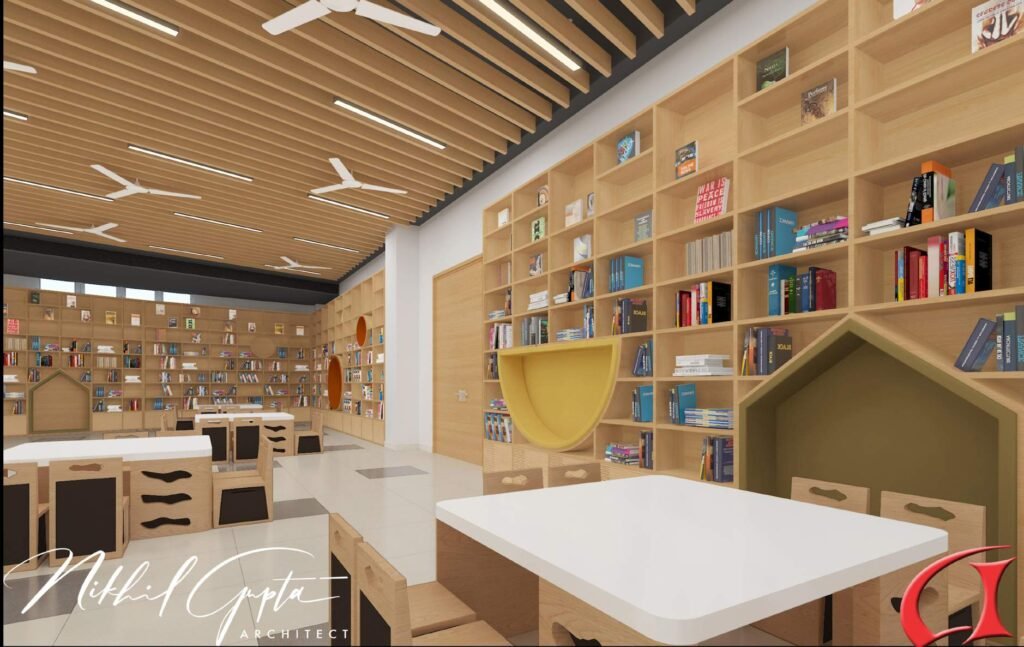
Wellbeing-Centred Design Parents increasingly choose schools with biophilic elements. Living walls, water features, and natural materials rank high on their selection criteria.
Net-Zero Energy Targets CBSE and several state boards now tie school recognition to sustainability benchmarks. Buildings designed today will be judged by 2030 standards.